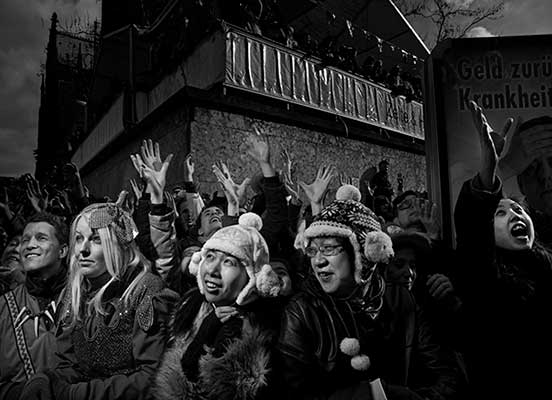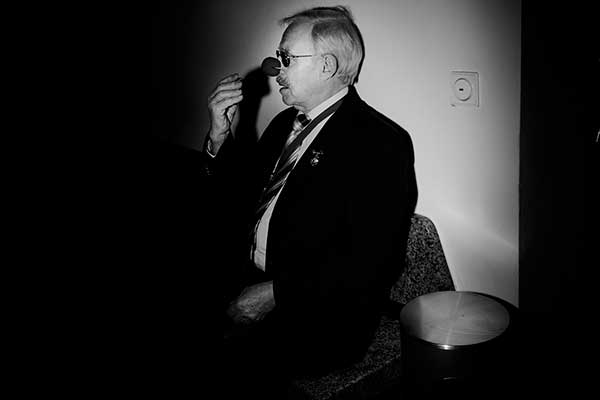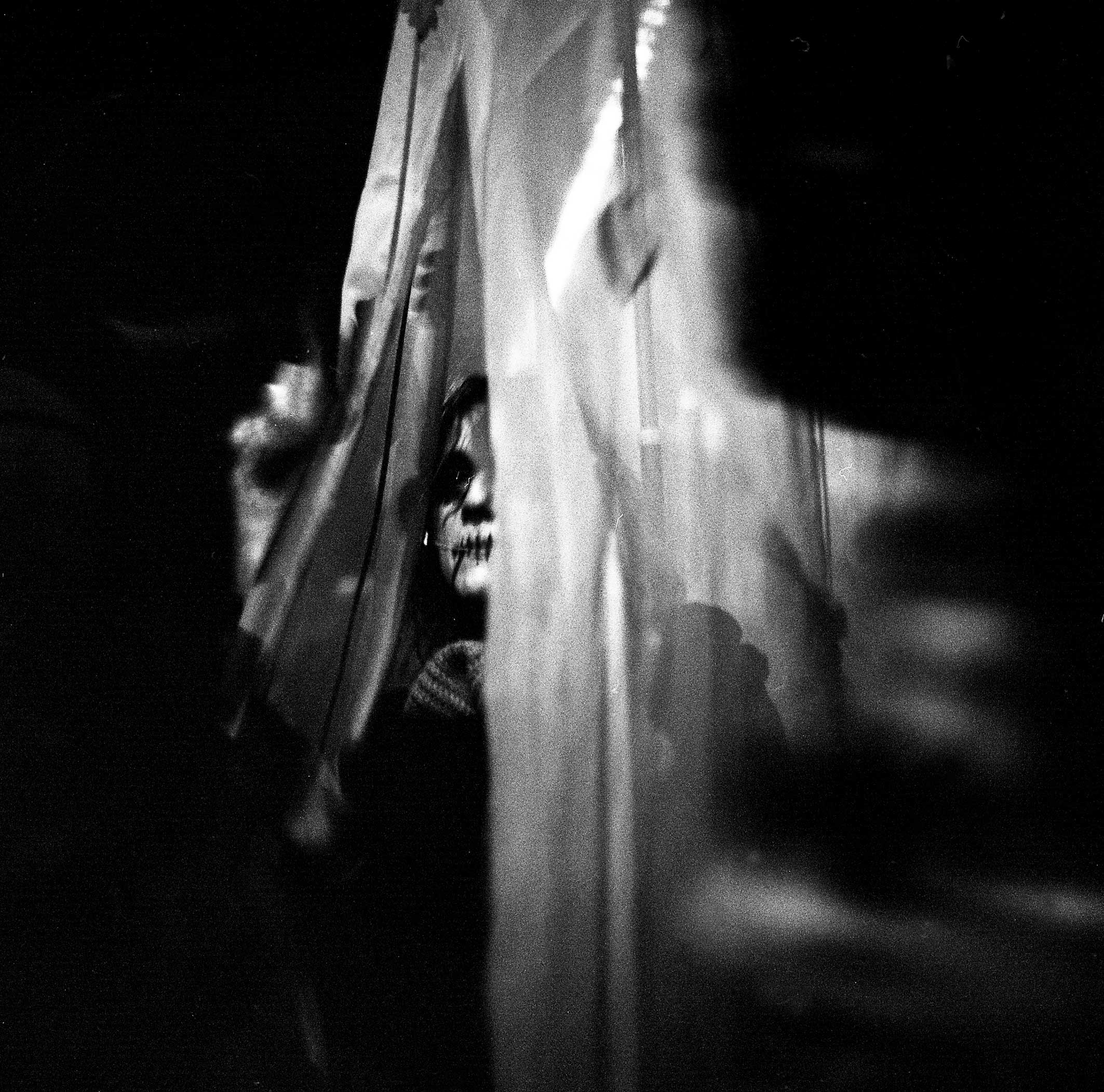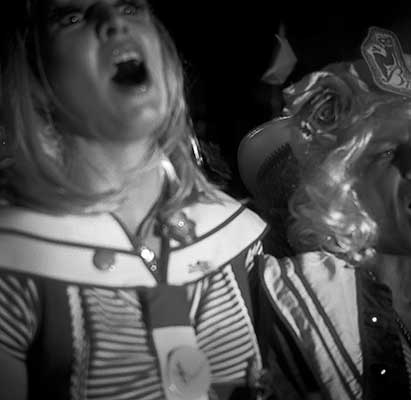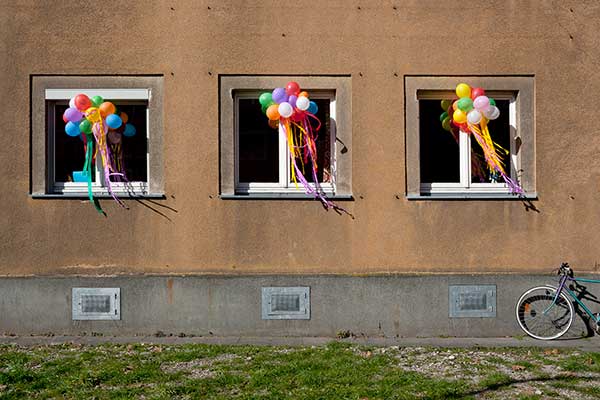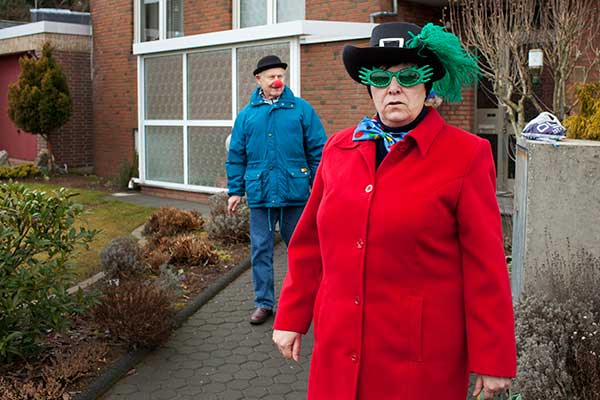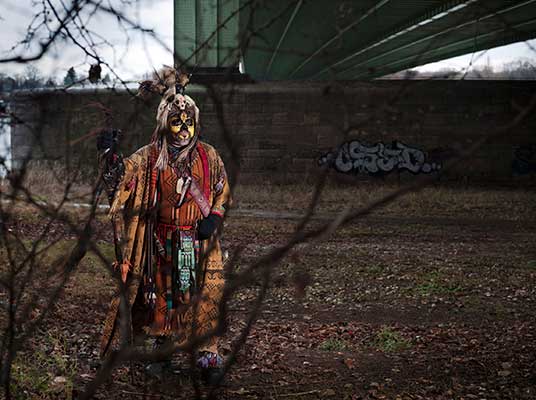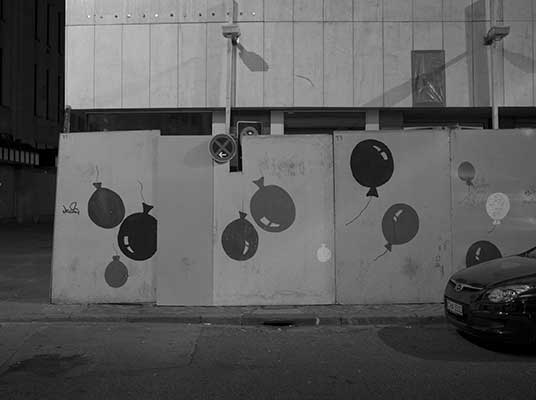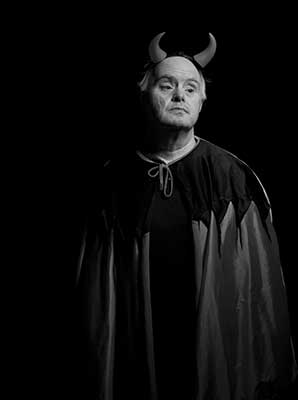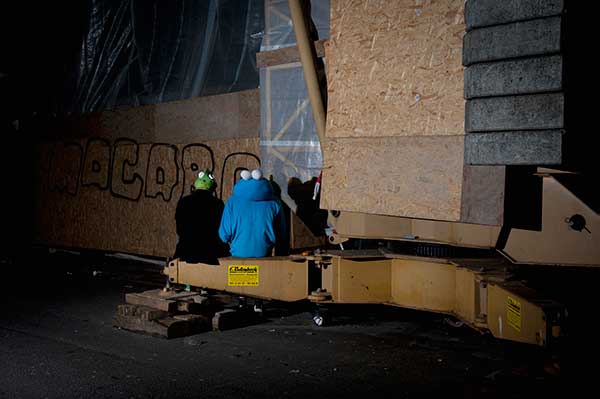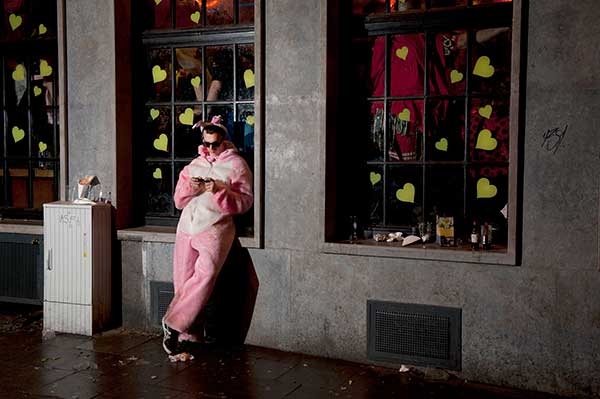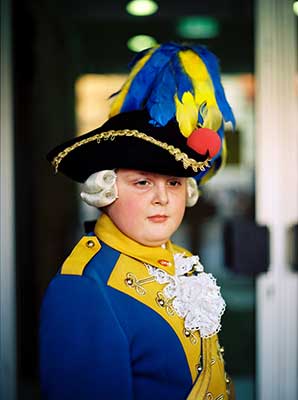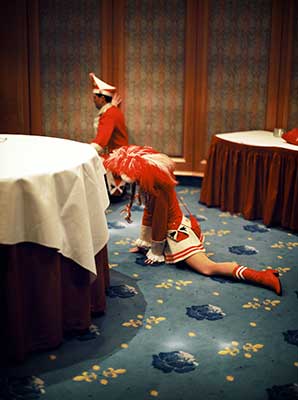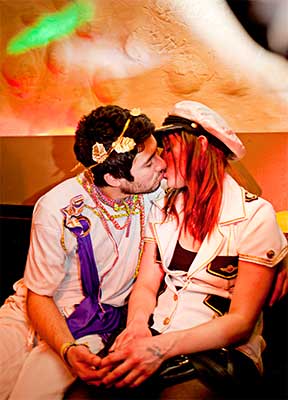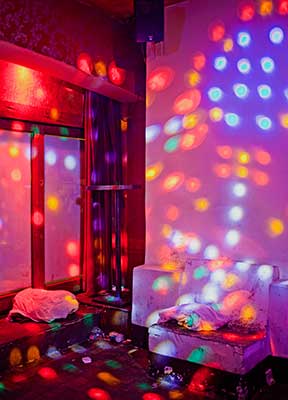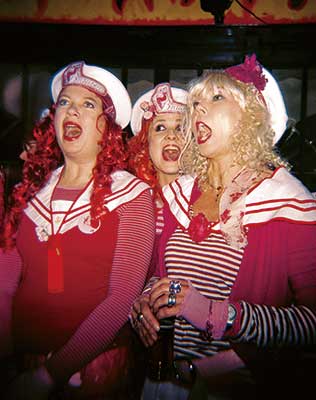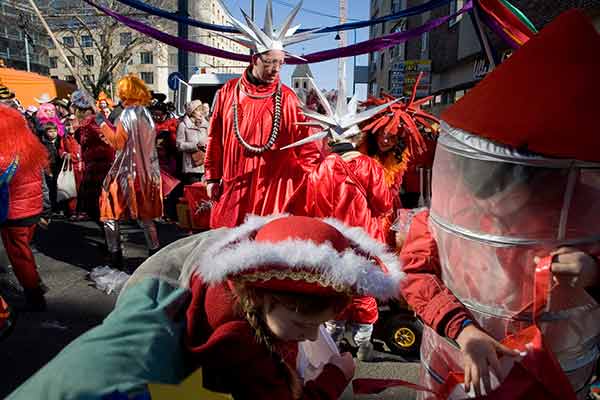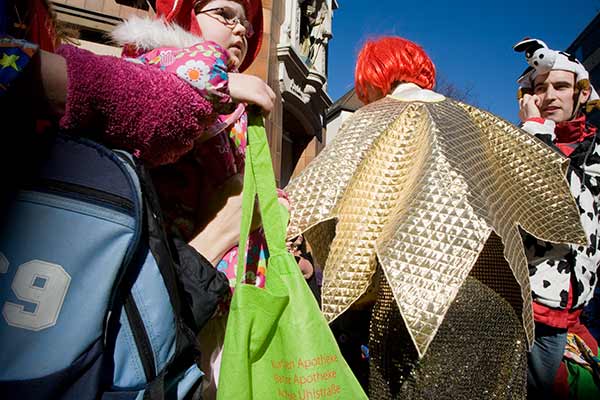


Elf Uhr Elf is an avant-garde photo-book, where nine most well-known Cologne photo journalists and artists for the first time realised a collaborative art project about the Carnival in Cologne. elfuhrelf is sympathetic to the idea of carnival and to all people participating in one of the biggest festivities in Germany. For the Rhinelanders it is the pure form of happiness, generating energy and power for the rest of the year. They create a modern, exciting and tender view on the Carnival in Cologne between carnival men's meetings und street carnival, between the private world of carnival presidents and the public pleasures of love, between reality and fairy-tale.
The photographs are showing the festivities of common people in the suburbs, the international attraction of the Shrove Monday procession and the mystic, archaic and phantasic ceremonies and parties of alternative carnival, by Ute Behrend, Theodor Barth, Thekla Ehling, Dirk Gebhardt, Matthias Jung, David Klammer, Frederic Lezmi, Nadine Preiß and Wolfgang Zurborn who focused on this energy.
While Photopeer had an exclusive tete-a-tete with Wolfgang Zurborn, we walked back with him through the memory lane of creating this amazing work of visual art. He spoke to us about crowd funding, a very interesting concept, where they raised the required publishing money (twelve thousand euros) in just forty days just by little amounts of money, not big sponsors.
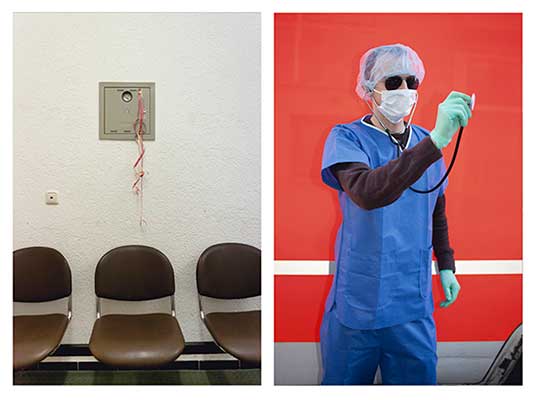
However, the most interesting element arose when we started talking about the production of the book, delving into the core of the editing. It was different in many ways, it was colour, and some were black and white; comprising of the portraits, the street photography; and at the beginning we divided them into chapters. This was due to the belief that one photographer’s work going to the other page results in “the loss of context and quality”, Zurborn opined. However, when that did not work, they decided to see how it feels when the photos are mixed up. So the nine photographers selected 25 or 30 of his or her photographs, and then 270 or 300 pictures were pooled and printed. But when they went round the table choosing the ones to go into the compilation, they realised that it does not work that way either. So in the end, it was focused that combinations of photos come together in the concept, but made sure that they were not obvious. According to Zuborn, the compilation had to have a flow, “like this colour and this colour, or this man and this woman,” but if one sees the combination directly, “then you are lost, you made a mistake.” The final production was very interesting, and a result of good cooperation.
The best part about the book, which in fact set it apart, was that the carnival been shown in a completely new light and intensity. Media normally shows in two clear shades: either as a celebration, or in the radical critique, where it’s only drinking and partying and fights. Ulf uhr Ulf shows all the different emotions of the carnival. Zurborn also went ahead to say that “People hate the carnival but love the book.” This was solely because of the edit. Different kinds of loneliness, the blend of euphoric mess, sad single people were all captured.
Elf uhr Elf was really a work of art. It was wonderful how Zurborn put the whole book in one sentence, “... I think the book is not only about carnival, but very much about condition of beings in the contemporary world.”